
Faith in the Future

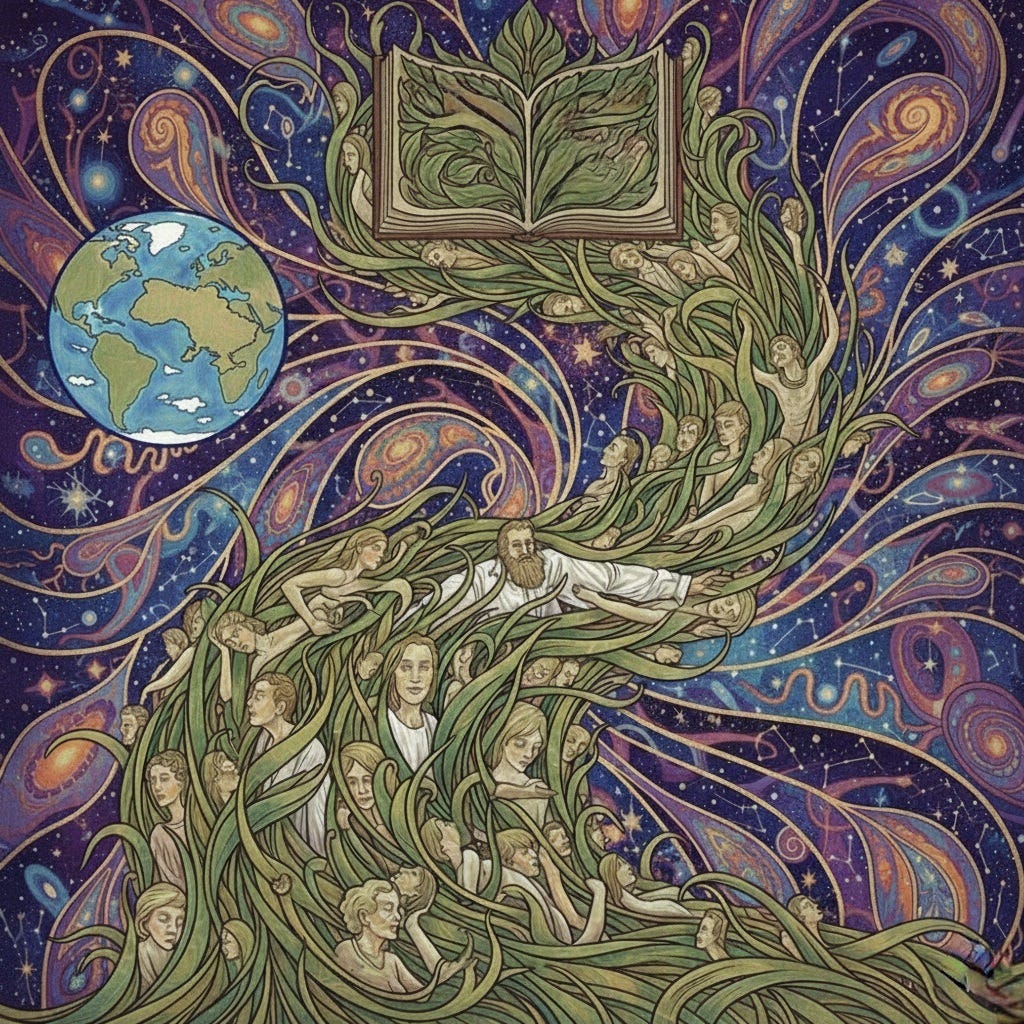
Phuture 2000 [Hybrid Mix]
[Begin:] Faith in the Future
Nearly 100 [approx. 171] years ago a romantic idealist published a testimonial of his democratic faith. The idealist was Walt Whitman and his testimonial, a collection of rough-hewn, powerful verses, was titled Leaves of Grass.
Whitman’s theme—a theme on which he played hundreds of variations was that America belongs to the future. In that future, he insisted, all of us must have confidence, even though immediate events might not justify a belief in eternal progress. Walt Whitman’s America was a photomontage of rising shapes “shapes of democracy total,” he wrote, “result of centuries, shapes ever projecting other shapes, shapes of the friends and homegivers of the whole earth, shapes bracing the earth and braced with the whole earth.”
Nevertheless, as one writer points out. “Whitman did not see his America through a pink mist; he was aware of danger. American political figures were small men, by and large. Individuals were self-seeking and communities corrupt; the full fruition of democracy was in the future. Yet democracy was working and there was joy in being tossed ‘in the brave turmoil of these times.’”
In the 96 years that have passed [approx. 171 years since this editorial was written in relation to the reference herein of 96 years] since Leaves of Grass appeared, Americans have further demonstrated that their democracy is a working system. Now for a time, at least—the greatest power on earth, the United States of America in 1951 bears the heaviest world responsibility ever borne by any nation in any time.
How well equipped are the people of the United States to discharge this responsibility? How many of us—of the 154,000,000 [now approx. 343,000,000]—in this bright land understand that the successive struggles of 175 [271] years of nationhood are merely a vast prelude to other struggles? How many of us can accept Walt Whitman’s adjuration that “it is provided in the essence of things that from any fruition of success, no matter what, shall come forth something to make a greater struggle necessary?”
Aware and justly proud of our high attainment of material civilization, can we Americans, in order to save ourselves and the world, regain that which we are in danger of losing—our collective soul? Strong in machines, in productive capacity, in natural wealth, in a literate, technically trained citizenry, can we become strong also in the spiritual qualities which alone can equip us to lead, here and everywhere, in the furtherance of a true civilization?
Currently a rash of noisy patriots exemplified by committees to “proclaim liberty” or “let freedom ring” are loudly calling the American people to renew faith in their heritage. Many of these organizations appear to be devoted largely to atavistic self-admiration. The touchstone of their patriotism is the established system rather than the pursuit and realization of the rights of man. Thus what the current patriotic fervor is likely to produce is a fresh crop of intolerances and prejudices. In fact, a sizeable portion of this crop already is being harvested.
What is now needed, as Whitman foresaw, is a revivification of American faith “that there is no greatness or power that does not emulate those of the earth.” This was the essential faith which moved the men who drafted the Declaration of Independence.
A community prospers and endures as it exhibits concern for life beyond its borders. Mere worship or blind devotion to the ruling group within a nation will not insure creative achievement. In fact, Historian Arnold Toynbee has pointed out that the chief cause of disintegration of historic civilizations was the change of ruling groups from “creative” to “oppressive” minorities.
If the United States is going to be creative in leadership toward a wider unity within the community of nations it will have to gear itself to the new social forces now operating throughout the world. These forces are engaged in a life-and-death struggle with the old forces of aristocracy, oligarchy, privilege, absolutism and rigidity, symbolized by the concentrates of agrarian, economic, political and ecclesiastical power which we now call by various names in various parts of the world. Some of these forces have become repressive in the name of correcting old injustices. This is particularly true of Communism. But it is also true of other contemporary forms of tyranny.
Americans must therefore see to it that, as theologian Reinhold Niebuhr says, “they gather up the timeless values and eliminate the worthless.” Many of these higher values are both implicit and explicit in the legacy of American idealism. Whitman sensed this idealism as affirming the deep faith that mankind can move forward toward a more extensive freedom only as he accepts his oneness with earth and heaven.
Today more Americans need the faith Whitman had. They need to realize that the challenge they face today is not merely to triumph over particular foes but to triumph over the confusion and evil of history.
~
Interrupting Systemic Atrocity: A Non-Aristotelian, Conscious Time-Binding Ethical Framework for Addressing Ongoing Mass Harm
~
F Krasnov Trumputler Trumputin & co.
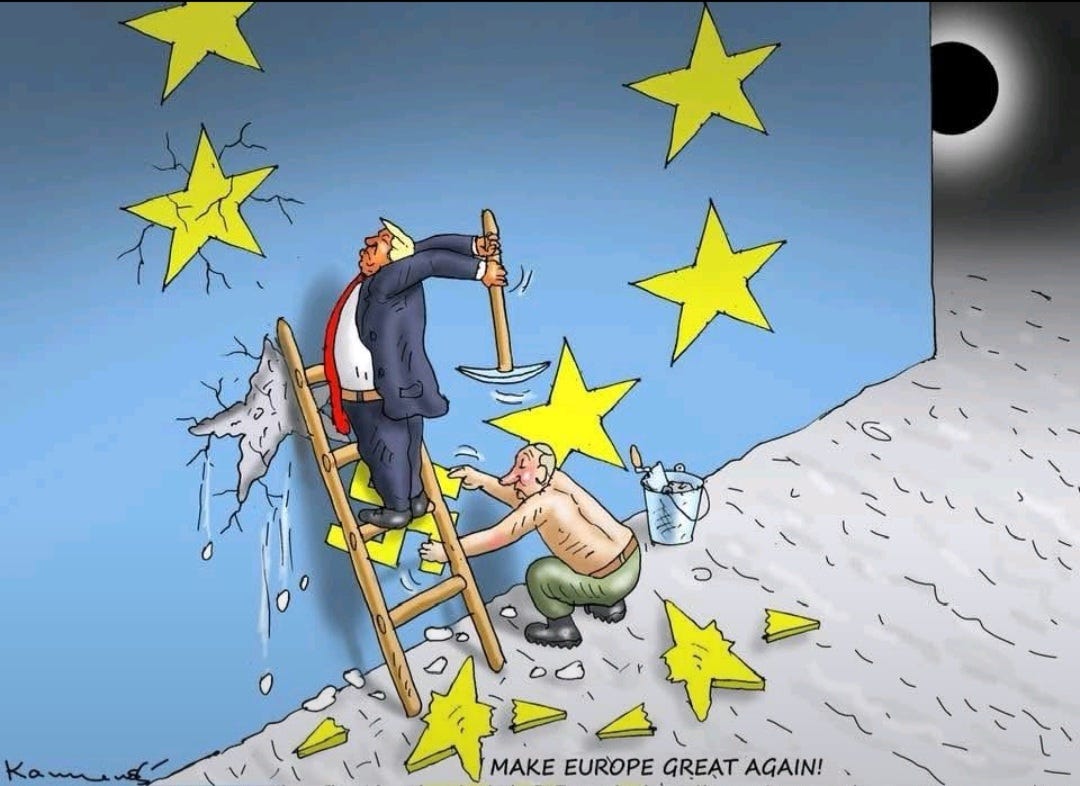
The day before yesterday,. Friedrich Merz, Chancellor of Germany, delivered the clearest [most watched/heard] speech in Europe in at least the last 10 years but what happened?
https://pc93.substack.com/p/yesterday-friedrich-merz-chancellor?r=55nkvn
~
Epsilon Phase
~
Science of the Whole Man