
Breathe into Be-ing

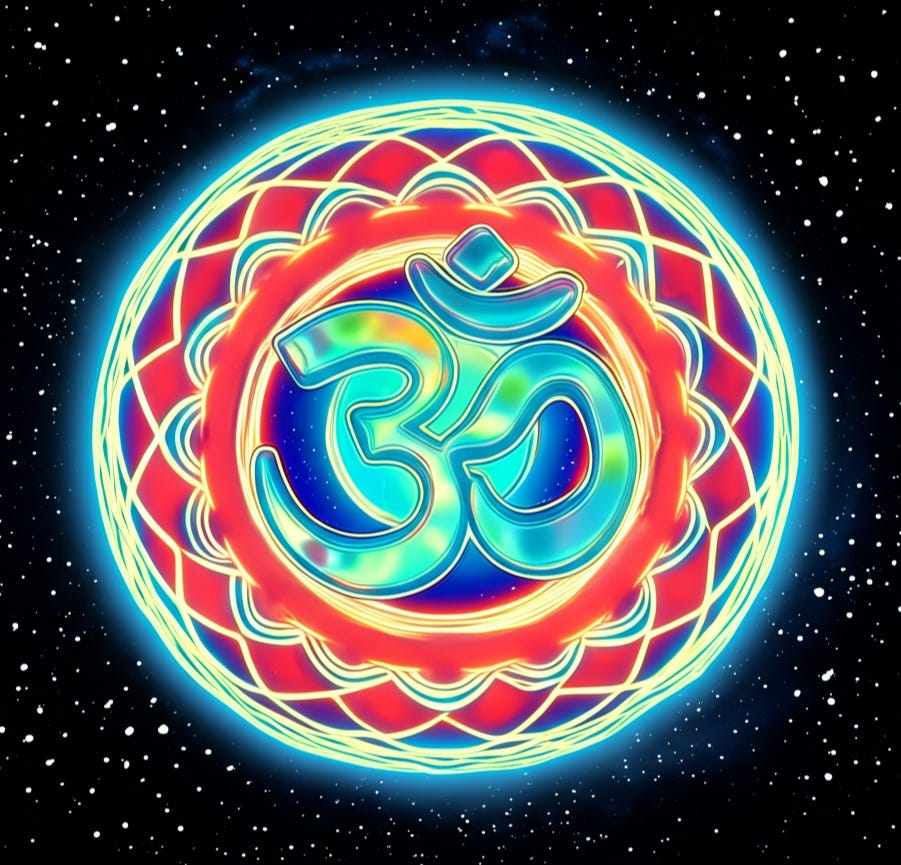
Breathe into Be-ing
| JVS / 5.23.2025
Words, Maps, and Breath: The Gateway Within
> “The map is not the territory. The word is not the thing. The breath is not just air—it is awareness made tangible.”
Intro: The Forgotten Portal
Most of us walk around with a world in our heads—a world of names, labels, memories, and plans. We breathe, but rarely notice it. We live, but often only through the lens of language. Yet just beneath this surface of words lies something more immediate and astonishing: the breath. A simple inhale and exhale can shift our entire state of being. In fact, certain forms of breathwork can evoke feelings remarkably similar to psychoactives—without substances, without cost, and with benefits that ripple into every area of life, leading to greater clarity, emotional resilience, and a profound sense of inner peace in daily life.
Here we'll explore how conscious breathwork opens the door to altered states of awareness, and how the tools of General Semantics—a discipline of thinking and perceiving beyond linguistic habits—can help us not only access these states, but understand and live them more deeply. General Semantics isn't just an intellectual exercise; it provides the cognitive framework to navigate these profound inner experiences, helping us avoid getting lost in labels or misinterpreting intense sensations.
The Map Is Not the Territory—But Breath Is
General Semantics teaches us a profound truth: The map is not the territory. In other words, our ideas, labels, and judgments are not reality—they are abstractions, like roadmaps drawn from a larger, more complex terrain.
And nowhere is this more evident than in our relationship to the body.
We say:
“I’m anxious.”
“I’m tired.”
“I’m fine.”
But these words often skim over what’s actually happening—tightness in the chest, shallow breath, buzzing in the limbs, or even warmth in the heart, lightness in the spine, tingles of inspiration behind the eyes.
Breathwork brings us back to the territory. It bypasses the verbal maps and immerses us in the raw experience of being. A single slow inhale can reveal the gulf between what we say and what we feel. And in that revelation, something shifts. The mind quiets. The body speaks.
Abstracting Levels: Peeling Back the Layers
General Semantics distinguishes between different levels of abstraction—what we observe, what we describe, what we evaluate, and what we symbolize in words. For example:
Sensory level: “There’s a tightness in my chest.”
Descriptive level: “I feel constricted when I think about work.”
Evaluative level: “I’m failing.”
Symbolic level: “I’m a loser.”
Breathwork, especially foundational practices like breath observation, helps us descend from the symbolic and evaluative levels back to the sensory. That’s where healing and expansion begin.
Try this:
> Simple Breath Awareness Practice
Sit or lie down.
Close your eyes.
Don’t change your breath—just observe it.
Inhale, notice.
Exhale, notice.
Let words fall away.
Let sensation speak.
Do this for 3–5 minutes. Then open your eyes.
Ask: What level of experience am I in now?
The High of Returning to Now
People often seek out psychoactives for a sense of release: from stress, from the chatter of thought, from time. But what if you were the source of that release? What if your own breath could offer a similar state—spacious, peaceful, present, and slightly altered and alive, in the best of ways.
Breath awareness drops us into the “now,” not as a vague ideal, but as a felt reality. With practice, this begins to feel... high, spacious, groundless, free. This isn't just psychological; the rhythmic shifts in breathing directly impact your nervous system, influencing brainwave states and optimizing the balance of oxygen and carbon dioxide, leading to feelings of profound calm and expanded awareness. And when interpreted through General Semantics, we can understand why:
We’re shedding abstract negative evaluations (“I’m not doing enough”).
We’re coming into direct contact with experience.
We’re allowing difference, change, and movement—in breath and thought.
This isn’t escapism. It’s reconnection.
Begin Again, With Breath
If you’ve ever felt disconnected, overwhelmed, or stuck in loops of thought—you’re not broken. You’re just living at the level of the map. The breath invites you home to the territory: your body, your being, your ever-changing, ever-present awareness.
As we continue we’ll go deeper into breathwork techniques that evoke even more altered states—from time dilation to euphoric silence. But all of it begins here, now, with the first conscious breath.
> Take one now.
> Feel the air.
> Remember: The breath is not just air—it is you, unfiltered.
Unbinding Time: Conscious Breathing and the High of Presence
> “The present is not a point, but a breathing field of becoming.”
Altered Time, Altered Mind
Have you ever noticed how time feels different when you're high? Minutes stretch, sensations linger, and everything takes on a sense of immediacy. But here’s the secret: you don’t need psychoactive substances to experience that shift.
Time isn’t just what clocks measure. It’s also a construct shaped by attention, breath, and consciousness.
Breathing practices, rhythmic breathwork—particularly box breathing and patterned rhythms—can dissolve the usual sense of linear time, placing you squarely in an altered state. Through the lens of General Semantics, we’ll explore how time is not an absolute but an abstraction—one we can rewire, re-experience, and reinhabit through breath.
What Is Time? A Semantic View
In General Semantics, time-binding refers to our uniquely human ability to pass knowledge across generations. But there's more. Our internal sense of time is largely linguistic—based on comparisons, labels, and narratives.
We say:
“Time is running out.”
“I don’t have enough time.”
“I’m wasting time.”
But step outside the symbolic layer, and ask: What is the experience of time, directly—without words?
Try this:
> Time Check-In
Close your eyes. Breathe deeply.
Ask: “How do I know time is passing?”
Feel your breath, your pulse, the thoughts drifting by.
Now slow your breathing.
Inhale for 4... hold for 4... exhale for 4... hold for 4.
Do 5 cycles.
Now ask again: What is time now?
The answer may surprise you.
Box Breathing: The Time-Bender’s Tool
Box breathing is a simple technique used by Navy SEALs, monks, and everyday mystics alike. The breath is shaped into a square—equal parts inhale, hold, exhale, hold. Like this:
* Inhale 4 counts
* Hold 4 counts
* Exhale 4 counts
* Hold 4 counts
Repeat for 2–10 minutes.
What begins as a pattern soon becomes a portal. As your nervous system downshifts and your awareness sharpens, something strange happens: time expands. Thoughts quiet. The need to “get somewhere” dissolves.
In General Semantics terms, you are shifting from the objectified structure of time (calendar, deadline, clock) to an experiential structure rooted in the breath and body.
You become organism-as-a-whole-in-an-environment—a central GS concept. Not a person in time, but an evolving awareness with time.
The High of Presence
Here’s the paradox: when you slow down, life opens up. In this expanded presence, people often report:
* A light buzz in the body
* Subtle visual or sensory enhancement
* A feeling of being “just here”—but more fully
* A euphoric clarity or joy
These effects mirror what many seek through psychoactives—but they’re available, free, in the rhythm of your own breath.
And just like General Semantics urges us to distinguish between symbol and experience, breathwork shifts us from stories about life to the raw presence of it.
This isn’t just a calm state. It’s an altered one—where your sense of time, self, and meaning is recalibrated.
Breathe the Clock Away
You are not a prisoner of time. You are a breather of moments. A weaver of rhythms. An experiencer of now.
With every structured breath, you reclaim time from the grip of symbols and stress—and return it to the pulse of being.
> The high of presence is not an escape. It’s a homecoming.
And your breath is the key.
Beyond Names: Euphoric Silence and the Language of the Body
> “At the silent level, before the words, before the labels—there is joy.”
—Inspired by Alfred Korzybski
When Words Fall Away
We live in a world built from language. But language is not reality—it’s a tool, a symbol system, a bridge. And sometimes, that bridge becomes a wall.
Words can name things, yes—but they can also numb us to what is. A breath, a feeling, a tremble of aliveness in the chest—these are real before they are ever spoken. And when we tap into them directly, without the filter of analysis, something astonishing happens: euphoria. Not as a chemical reaction, but as a reunion with ourselves.
Let us explore conscious connected breathing—a technique that dissolves inner narratives and awakens the body’s wordless wisdom. General Semantics, with its concept of the silent level, helps us understand this process and deepen into it.
The Silent Level: General Semantics Goes Wordless
In General Semantics, the silent level is the raw, unlabelled world of sensation and being that exists prior to language. Korzybski emphasized that words are always abstractions from experience, and that real sanity and growth require touching this pre-verbal realm.
Imagine:
Before the word “pain,” there is a pressure in the chest.
Before the label “anxiety,” there is a flutter in the belly.
Before “I’m not enough,” there’s a tensing in the jaw.
The body speaks in pulses, sensations, and flows—not sentences.
And when we enter that silent level—especially through connected breath—we often find something more than pain. We find release. Clarity. Joy. Even ecstasy.
Conscious Connected Breathing: The Practice
This breathwork involves eliminating the pause between inhale and exhale, creating a circular, rhythmic flow:
* Inhale gently, fully.
* Exhale naturally, without force.
* No pause between.
Repeat for 10–20 minutes.
With eyes closed and attention inward, the breath becomes a wave washing through the body. Emotions rise and fall. Thoughts fade. And then—the high begins.
People report:
* Tingling in the limbs
* Expansive stillness
* Waves of euphoria
* Release of old tension or emotion
* A sense of being fully alive and wordlessly known
This is the euphoric silence—a sacred space where the inner critic dissolves, and the body becomes its own language. While these practices are generally safe, for deeper or more intense breathwork journeys, consider exploring guidance from experienced facilitators.
Non-Allness, Multi-Ordinality, and the Joy of Not-Knowing
General Semantics gives us more tools to understand this terrain:
Non-allness: No word can say all there is. No label captures the totality. When we stop trying to name everything, we open to what is.
Multi-ordinality: Words mean different things in different contexts. “Breath” isn’t just a biological function—it’s a spiritual portal, a feeling, a rhythm, a metaphor. Conscious breathing unlocks all these layers, beyond rigid definitions.
In this way, breathwork becomes a semantic liberation—freeing us from the tyranny of fixed meanings and letting life speak anew through sensation, image, and vibration.
You Are More Than the Words You’ve Learned
You are not just your name, your story, or your thoughts. You are a body of meaning. A living field of breath, of be-ing and becoming.
When you enter the silent level, you don’t lose yourself—you find yourself. And often, in that deep place of no-words, you feel high—not from escape, but from arrival.
> Try this: Let go of naming. Let go of narrating.
Just breathe. Just feel. Just be.
That is the language of the body.
That is the language of the real.
Let’s breathe it home.
From High to Higher: Breath, Semantics, and the Conscious Cosmos
> “To breathe is to participate in the universe. To do it consciously is to co-create with it.”
The Shift from Personal to Cosmic
So far, we’ve explored breath as a gateway to altered states—mimicking the psychoactive high through presence, stillness, and silence. But what if that was just the beginning?
In this final part, we expand our view. What starts as a technique becomes a path. What feels like an internal shift reveals itself as cosmic participation.
Here, breathwork meets metaphysics, and General Semantics meets sacred science. This is the zone where time-binding becomes cosmos-binding, where conscious breathing aligns you with the creative structure of reality itself.
Semantic Awakening: You’re Not Just Breathing Oxygen
General Semantics teaches that our symbols shape our world. If you believe breath is “just air,” you get one kind of experience. But if you approach it as energy, presence, or cosmic communion—you open a very different door.
Think of breath as:
* Rhythmic intelligence
* Carrier of information
* Language of the life process
Each inhale is not just physiological—it’s ontological. It affirms: “I exist. I’m part of this.” Each exhale is a letting go into the larger field of Being.
As you consciously engage the breath, you unbind from inherited meanings (stress, time, identity) and enter a co-creative dance with reality. This is conscious time-binding at its peak: not just receiving knowledge from the past, but evolving the human experience in the present.
Breath and the Fractal Field
In altered states induced by breath, people report visions of interconnectedness—geometry, light, patterns. These aren’t hallucinations. They may be glimpses of the fractal intelligence that structures life itself.
Breath is fractal: expanding, contracting, circling, spiraling. The same pattern exists in galaxies, tides, thought cycles. You are not doing breathwork. You are being breathed by the cosmos.
In this view:
* The inhale is a receiving of universal intelligence.
* The exhale is a giving back—your conscious signature.
* The rhythm is the conversation.
You are not isolated. You are in semantic dialogue with the whole.
High as Home: No Substance Required
The psychoactive high mimics this elevated state temporarily. But breath lets you live there. When practiced daily, it becomes not an escape, but a foundation:
* Calm without detachment
* Ecstasy without dissociation
* Clarity without overthinking
* Presence without pressure
And because breath is universal, it connects you to everything else that breathes. You begin to experience what mystics and scientists alike point to: oneness.
> To breathe with awareness is to enter into the structure of reality itself.
You are no longer just in the universe. You are participating in its unfolding.
Conclusion: You Are the Living Bridge
This article began with a question: can breath create an altered state like psychoactives?
The answer is not just yes—it’s more. Breath doesn’t mimic. It reveals. It heals. It re-orients you.
Through breath and the lens of General Semantics, you move from high… to higher… to home. You no longer chase a feeling. You become the field.
> You are the binder of time. The knower of silence.
> The breather of the cosmic story.
Breathe in to the ever-new, here-now expansiveness, the exuberant and magical wonderment of being.
Om namo bhagavate.
this is powerful
This is absolutely fantastic 👏 ✨️