
Bending Low, Reaching High: General Semantics, Conscious Abstracting,.—the Art of Limbo,. via Milton Dawes

Bending Low, Reaching High: General Semantics, Conscious Abstracting,.—the Art of Limbo,. via Milton Dawes
| JVS / timebinder / 7.18.2025
,. = etc.
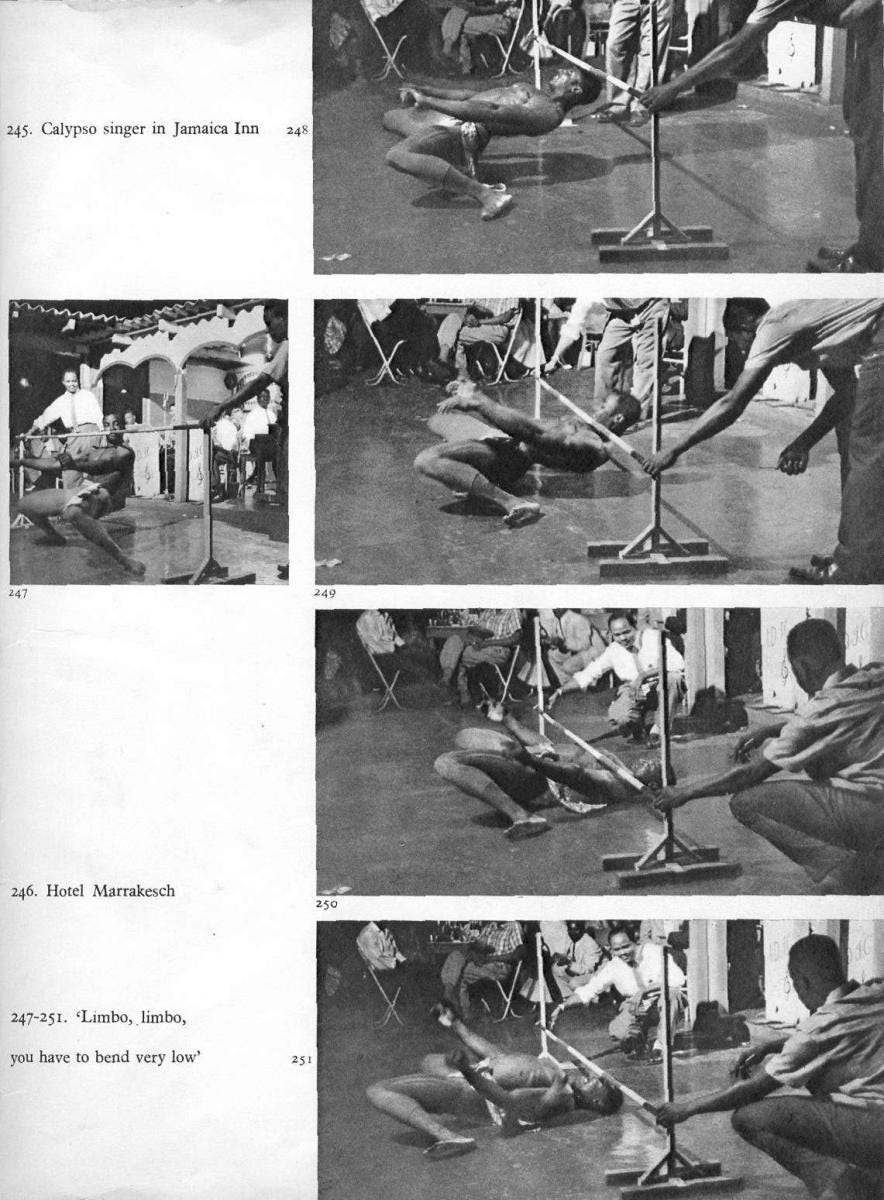
'Limbo, limbo, you have to bend very low'
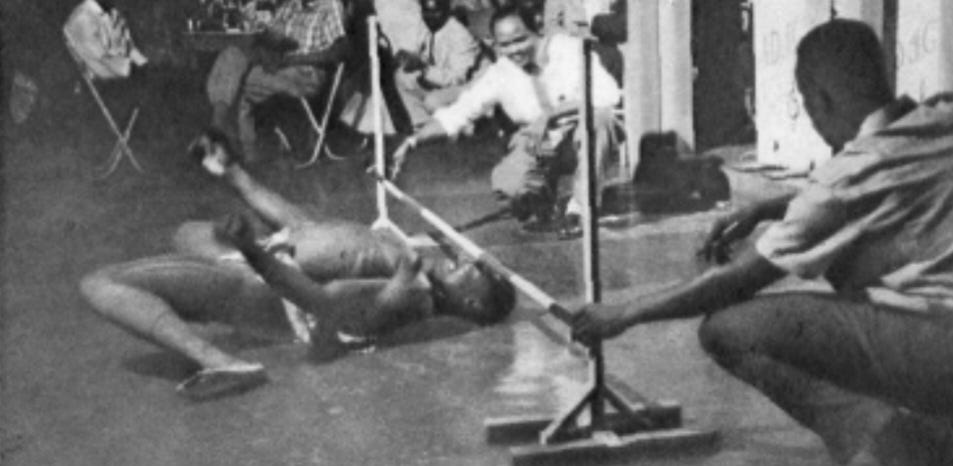
In an Ocho Rios hotel courtyard in the early 1960s, Milton Dawes, Limbo Champion, skillfully contorted his muscled frame beneath a limbo bar that had descended to the astonishing height of a Coke bottle. His fluid precision captivated onlookers as they cheered this successful, quite wonderful and amazing feat and pass. The bar had dropped incrementally with each round, demanding ever-greater flexibility, awareness, and control. What the audience witnessed was not merely entertainment, but a profound physical demonstration of principles that would later find their intellectual expression in Dawes' lifelong dedication to general semantics.
The connection between limbo dancing and general semantics may seem unlikely at first glance. Yet in the remarkable life of Milton Dawes— bodybuilder, limbo champion, one-time Dr. No/James Bond stunt double, drummer, and pioneering teacher/exemplar of Alfred Korzybski's general semantics discipline—we find a living synthesis of physical and mental flexibility that illuminates both arts with startling clarity.
The Consciousness of Abstracting in Motion
At the heart of general semantics lies what Korzybski called "consciousness of abstracting"—the awareness that in any moment of perception, thinking, or action, we are selecting certain aspects of reality while necessarily ignoring others. As Dawes explains in his writings, this principle involves "being attentive, witnessing, being aware that we are 'doing' and how we are 'doing' (thinking-feeling, believing, imagining, saying, and doing, etc.)."
The limbo dancer embodies this principle in its purest form. Approaching the bar, Dawes would have been acutely conscious of his body's position in space, the angle of his spine, the distribution of his weight on his feet and legs, the rhythm of his breathing,. Each element demanding attention and extreme, or other,. focus while others receded into the background. The successful limbo dancer practices what we might call "psychophysical consciousness of abstracting"—moment-to-moment awareness of the process of selecting which muscles to engage, which movements to emphasize, which sensations to focus upon,.
This psychophysical,. awareness mirrors the mental discipline that Dawes taught in his general semantics workshops. Just as the limbo dancer cannot succeed without acute awareness of their body's position and movement, the critical thinker cannot progress without consciousness of their mental processes—their assumptions, their abstractions, their selective attention to certain aspects of a situation while ignoring others.
Non-Identity and the Fluid Self
The principle of non-identity—that no two things are identical, and that even a thing is not identical with itself across time—finds vivid expression in the limbo dancer's experience. Each approach to the bar represents a unique moment: the dancer's body has changed, however slightly, from the previous attempt. The bar will be at a different, lower height, the ground surface may seem to have shifted, the crowd's energy may have altered. The dancer who tries to repeat exactly the same movement from the previous successful pass will likely fail.
Milton Dawes understood this principle intimately. Although he was already reading Korzybski's "Science and Sanity" at the time, in his later general semantics teaching, he emphasized that "things are not (and are more than) what we think, say, imagine, believe, them to be." The limbo dancer learns this lesson through the body: they are not identical to their previous successful attempt—they must respond to the present moment with fresh awareness, vigor, focus,.
This principle extends to the bar itself. The limbo bar at two feet is not the same challenge as the limbo bar at the height of a Coke bottle. The dancer must abandon their previous strategies and discover new possibilities for movement. Similarly, in general semantics, we learn that our mental maps must be constantly updated to reflect new territories of experience.
"Festina Lente"—The Rhythm of Controlled Urgency
In his poem "Festina Lente," Dawes explores the principle of "haste slowly"—the ability to move with urgency while maintaining inner calm and control. This concept finds perfect expression in limbo dancing. The dancer must generate enough momentum to move smoothly under the bar, yet maintain such precise control that they can stop, adjust, and correct their movement if necessary.
The photographs of Dawes limboing reveal this principle in action. His body demonstrates controlled fluidity—neither rushing nor hesitating, but moving with what he called "controlled urgency." This quality appears throughout his life: the disciplined bodybuilder who also embraced the spontaneous joy of drumming and playing a part as a Dr. No stand-in, the serious academic, biochemistry lab technician in Kingston,. who could engage in playful, quite extraordinary limbo performances, the thoughtful general semantics teacher who encouraged students to consciously time(s)-bind and explore that which is be-ing,—being, creative being,.
As Dawes wrote: "We can be busy.. without harassing ourselves. We can wait.. without being impatient. We can hurry.. and yet stay calm." The limbo dancer embodies this paradox, moving with purpose, physical dexterity and forward impulsion while maintaining the inner stillness and concentrated focus—both physically and mentally—requisite for precise embodied control and in the case of a champion, ultimate success in such action.
Conscious Time-Binding Through Physical Culture
Dawes' understanding of conscious time(s)-binding—the uniquely human capacity to build upon the achievements of previous generations—extended naturally to physical culture. In his 2005 essay "On Time-Binding Consciousness," he emphasized that time-binding involves not merely accumulation but genuine progress and improvement. The limbo tradition exemplifies this principle perfectly.
Each generation of limbo dancers builds upon the techniques of their predecessors, developing new methods, exploring new possibilities for human flexibility. The dance form itself represents time-binding in action—the preservation and transmission of cultural knowledge through embodied practice. When Dawes performed limbo, he was not merely entertaining tourists; he was participating in a living folk wisdom/tradition of conscious time-binding that connected him and connects to generations of conscious time-binders.
Moreover, his own approach to limbo reflected his general semantics training. Rather than simply copying traditional techniques, he brought his background in bodybuilding, his understanding of biomechanics,. and his consciousness of abstracting to create his own unique style. This exemplifies, again, what he called "conscious time(s)-binding"—the deliberate application of awareness to the process of building upon existing experience, thinking, knowledge,. in maneuvering the territory, which includes physicality.
Non-Elementalism and the Integrated Self
The principle of non-elementalism—the recognition that we live in a world of relationships where separation is largely a verbal construct—finds powerful expression in Dawes' integration of physical and intellectual pursuits. The conventional wisdom of a particular timeframe may have separated the "mindless" physical performer from the "cerebral" academic—not so Milton Dawes, he embodied their fundamental unity.
His limbo dancing in this light was not separate from his general semantics teaching; it was an expression of the same principles. Both required acute awareness, flexibility, the ability to respond to present circumstances rather than predetermined patterns. Both demanded "extensional thinking"—attention to process, structure, and function rather than fixed definitions and categories.
The photographs of Dawes limboing reveal this integration. His face shows not the vacant expression of someone "turning off" their mind to focus on the body, but the alert awareness of someone fully present to the moment. His body demonstrates not mere physical flexibility but the embodied intelligence that comes from applying consciousness to movement.
The Elegance of Simplicity
Throughout his writing, Dawes emphasized elegance as a criterion for truth—the quality of being "simple, yet profound." The limbo dance exemplifies this principle. The basic concept could not be simpler: bend low and dexteriously enough and at the same time moving forward to pass under a bar. Yet the execution necessitates the integration of complex biomechanical, psychological, and aesthetic elements.
This simplicity-in-complexity mirrors the structure of general semantics itself. The basic principles—non-identity, non-allness, consciousness of abstracting,.—can be stated simply. Their application to the complexities of human experience requires the same kind of disciplined practice that Dawes brought to his limbo dancing.
The elegance of Dawes' limbo technique lay not in its complexity but in its efficiency. He achieved maximum bodily control/flexibility in motion, with simple but focused effort—maximum control with just the right amount of tension and momentum(s). This reflects his general semantics teaching, which emphasized using "our nervous systems most efficiently"—achieving maximum awareness and adaptability with just enough utilization of ones focused energies and complete awareness of the levels of conscious abstraction.
From Limbo to Life: The Practical Applications
The principles revealed through limbo dancing extend far beyond the dance floor. In general semantics (g.s.) teaching, Dawes emphasizes that g.s. discipline, principles/tools,. provide(s) a general method not only for scientific work, but also life as we know it—skills of which translate directly to what he refered to as advanced thinking, including feeling better, doing better, being more creative and achieving more.
Flexibility in Problem-Solving: Just as the limbo dancer must utilize new flexible movement and forward motion patterns as the bar descends, the general semantics practitioner remains extensional/flexible in their approach to problem-solving, rejecting ineffective and wrong anti-time-binding strategies, continually improving upon and exploring new and infinite possibilities for conscious time-binding ethics and advancements.
Present-Moment Awareness: The limbo dancer cannot succeed while lost in thoughts about previous attempts or future challenges. Similarly, effective thinking requires attention to present circumstances rather than out-of-date mental maps.
Integration of Opposites. The limbo dancer learns to be simultaneously relaxed and alert, focused and flexible, controlled and spontaneous. General semantics teaches similar integration—the ability to hold multiple perspectives [multi-ordinality] simultaneously, being committed and open to change.
Process Orientation: The limbo dancer focuses on the quality of movement rather than merely clearing the bar. General semantics emphasizes process over product, the how of thinking rather than merely the what.
The Continuing Dance
Milton Dawes' intellectual discipline and lifework continues to offer insights for contemporary seekers. In an age of increasing specialization and fragmentation [and hopefully defragmentation, unity,.], his example reminds us that true wisdom emerges from the integration of all our capacities—physical, intellectual, emotional, spiritual, creative,.
The photographs of Dawes limboing capture more than a moment of athletic achievement. They document a philosophy in motion, a way of being that honors both the body's intelligence and the mind's capacity for awareness. In his fluid descent beneath and passing the limbo bar, we see enacted the principles in his life teaching: consciousness of abstracting, non-identity, non-elementalism, and the elegant simplicity that emerges when we learn to "bend very low" while reaching the very heights.
The limbo bar, in its descent, teaches us that sometimes the path forward requires us to become adjustable, more flexible, more aware. As Dawes understands, exemplifies,. this is not a diminishment but a deepening—a discovery of capacities we didn't know we possessed. In learning to bend low, we learn to reach high. In embracing the principles of general semantics, we discover not limitations but new possibilities for human excellence.
The limbo dance of life continues. As it's limbo bar is in play, the question remains: If we are to reach the other side of the bar to further heights of advancement, how flexible can we be? And perhaps more importantly: How much will we discover about ourselves in the process of finding out?
~
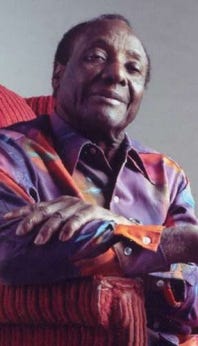
Milton Dawes, a grand exemplar/pioneer in the teaching of general semantics, a discipline developed by Alfred Korzybski, was born in Jamaica, served as a Trustee and is an Ambassador at Large of the Institute of General Semantics and received both the Irving J. Lee Award for Excellence in Teaching General Semantics (1995) and the Talbot Winchell Award (2000). His integration of physical and intellectual disciplines continues to inspire students of g.s., consciousness and critical thinking,. worldwide.
Refs:
Hello World
https://pc93.substack.com/p/hello-world?r=55nkvn
Dynamic Human Cooperation Council (DHCC) Human Commonwealth Vision
https://pc93.substack.com/p/dynamic-human-cooperation-council?r=55nkvn
Join the Conscious Time-Binding Alliance (CTBA)—A Work in Progress and Call to other Conscious Time-Binders.
The ‘power to do good is the true and lawful end of aspiring’. — Sir Francis Bacon
https://pc93.substack.com/p/join-the-conscious-time-binding-alliance?r=55nkvn
Milton Dawes on LinkedIn
https://www.linkedin.com/in/milton-dawes-20182618
Interview with Milton Dawes
https://standincentral.com/2011/11/23/interview-with-milton-dawes/
About Milton Dawes
https://miltondawes.ca/about/
Dr. No Trailer w/ Dawes as stand-in feature https://youtu.be/pw61uyA0F8A?si=AP1frgNsCWKWeiDP
Advanced Thinking
https://miltondawes.ca/
Institute of General Semantics [IGS]
https://generalsemantics.org/
New York Society for General Semantics
https://nysgs.org/